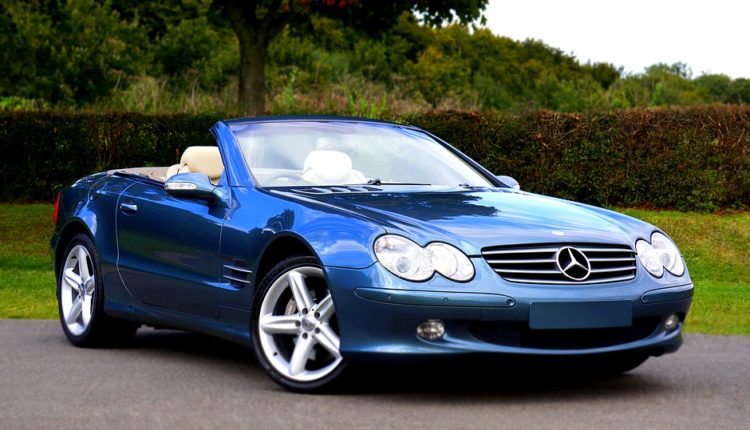
Mercedes- Benz
Gottlieb Daimler and Carl Benz were born only
Although they grew
up with little in common, both boys were fascinated by machines from an early
age. Because their approach to building cars was quite different, it is
doubtful, though, that they met or even knew what the other was doing.
In 1886, Carl Benz built a motorized tricycle. His first
four-wheeler, the
In 1886, Gottlieb Daimler literally built a horseless
carriage. In 1888 Daimler made a business deal with William Steinway (of piano
fame) to produce Daimler's products in the
Ironically, history says Daimler, generally considered to
be the father of modern automobiles never liked to drive, if, indeed he
ever learned to drive. On
By November 22 of that year, Daimler-Motoren-Gesellschat
had produced a special car for Emil Jellinek. Jellinek named the car after his ten-year-old daughter
Mercedes. Lighter and smaller, the new Mercedes had 35 hp and a top speed of
The 1903 Parsifil was Benz's
answer to Mercedes. A two cylinder vertical engine produced a top speed of
Aware of the promotional potential of racing, both Daimler
and Benz entered many of them. However, up until 1908, Daimler had overshadowed
Benz in racing endeavors. At the 1908 French Grand Prix, Benz took second and
third place behind Lautenschlager driving a Mercedes.
From that point on, both Benz and Daimler did well in racing.
At the beginning of the first world war, both factories
were converted into production sites for war materials, although both resumed
producing cars after the war.
Mercedes-Benz from WWTs
End to the Mercedes-Benz Merger.
Social unrest and a
falling economy characterized post-war
Thus, in 1919, Karl Jahn, a Benz
board member since 1910, approached Daimler-Motoren-Gesellschat
about a possible merger. The merger attempt looked promising, then was
abandoned in December of 1919.
The German economy continued to worse and a new Benz
automobile eventually cost 25 million marks.
Although nearly 15 million cars were registered in the
world in 1923, over 80% of them were registered in the
In 1924, from sheer economic necessity, Benz and DMG signed
an "Agreement of Mutual Interest." Although both companies retained
their identities, the agreement was valid until the year 2000. The two
companies merged with relative ease on
Mercedes-Benz from the Mercedes-Benz Merger Through the 20 s
A
symbol was chosen for the combined products of DMG and Benz. The new insignia
was a three-pointed star wreathed with laurel. The word "Mercedes"
was at the top and the word "Benz" was at the bottom.
Then merger did the new company well. Production of
Mercedes-Benz rose to 7,918 Mercedes-Benz automobiles in 1927. The
Mercedes-Benz diesel truck was put into production in 1927, also.
The first two automobiles to sport the Mercedes-Benz name
were the
Mercedes- Benz 1930 and beyond for
Mercedes-Benz
Mercedes-Benz launched their biggest and most prestigious
car to date in 1930. The 770 Grosser was powered by an 8 cylinder,
The cars of the 1930s produced great racing success for
Mercedes-Benz. The silver metal bodywork gave rise to the name Silver Arrows
when the W25 racer (of Rudolph Caracciola fame) had
the white paint removed to lower its weight.
W125 (
The Mercedes-Benz 170V gave Mercedes the capability of
surviving and then recovering from WW II.
Mercedes-Benz Classics produced from 1930 - 1970.
|
Mercedes
Benz Type |
Production:
Years |
Length:
Inches |
Weight:
Pounds |
|
Mercedes-Benz
770 Grosser |
1930-37 |
210 |
6000+ |
|
Mercedes-Benz
380K/500K/540K |
1933-1939 |
185-205 |
4500-5100 |
|
Mercedes-Benz
770 Grosser |
1938-1940 |
246 |
7600-8100 |
|
Mercedes-Benz
Type 300 |
1951-1962 |
195 |
3860-4400 |
|
Mercedes-Benz
Type 300S/Sc |
1952-1958 |
186 |
3600 |
|
Mercedes-Benz
300SL |
1954-1963 |
180 |
2750-3000 |
|
Mercedes-Benz
190SL |
1955-1963 |
169 |
2515 |
|
Mercedes-Benz
Coupe/Cabriolet |
1959-1971 |
192 |
3330-3650 |
|
Mercedes-Benz
Type 600 |
1963-1980 |
218-246 |
5445-5820 |
|
Mercedes-Benz
230/250/280SL |
1963-1971 |
169.5 |
2855-2900 |
|
Mercedes-Benz
300SEL 6.3 |
1967-1972 |
196.9 |
4010 |
Models of
Mercedes Benz Cars in
With the aim to serve the customers in

A –Class AMG-SL 65(Black Eddition)

C-Class
The newly created automobile
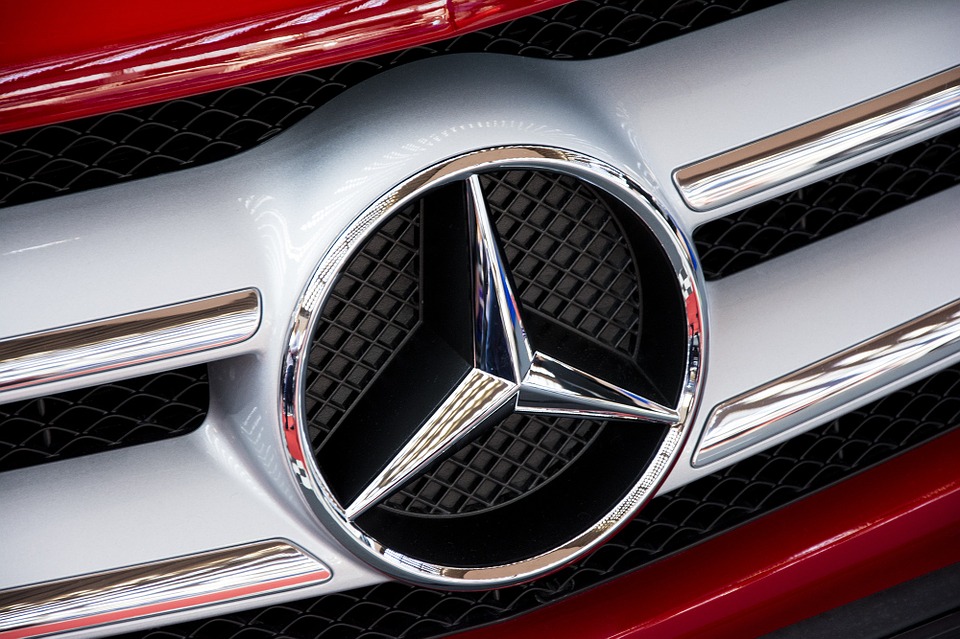
company, Mercedes-Benz also needed a new image symbolizing their
enterprise union. Their iconic three-pointed star is pervasive and unmistakably
recognized around the world. But its design has evolved in many ways since the
company merged in 1926. One early logo was trademarked
in the
The drawing
design Mercedes-Benz logo is a registered trademark at the USPTO, and owned by Daimler AG
The design of the Mercedes-Benz
signature logo was described by the USPTO with three aspects, 1) Stars with
three points (Celestial bodies, natural phenomena, Geographical
maps — Stars, comets), 2) Garlands, wreaths, bands, borders or frames made of plants
(Plants — Decorations made of plants), and 3) Circular or elliptical seals (Heraldry,
flags, crowns, crosses, arrows, and symbols — Seals).
Daimler-Benz elaborates on their
use of the new logo and its representations in their 1928 application. Based
upon their description, it appears they combined design elements from each
automobile company to create a new logo reflecting each company's legacy. They
stated that the trademark was applied to goods in their business since October
1926 with the trademark, "having been used in the business of the
applicant's predecessors and in the business of applicant, continuously since
the following dates. The word Mercedes since December 1900; the word Benz since
July 1896; the representation of a three-pointed star since June 27, 1909, the
representation of a wreath of laurel since September, 1909." In their
|
|
|
In 1958, Mercedes-Benz entered
into a distribution agreement with the Studebaker-Packard Corporation of South Bend, Indiana (USA), makers of Studebaker
and Packard
brand automobiles. Under the deal, Studebaker would allow Mercedes-Benz access
to their U.S. dealer network, handle shipments of vehicles to
those dealers, and in return receive compensation for each car sold. Studebaker
also was permitted to use the German automaker's name in its advertisements,
which stressed Studebaker's quality over quantity.
When Studebaker entered into
informal discussions with Franco-American automaker Facel Vega about offering their Facel Vega Excellence
model in the
Mercedes-Benz maintained an
office within the Studebaker works in
Mercedes-Benz Accessories
GmbH is an independent subsidiary based in Stuttgart-Vaihingen,
founded in 2000. Its business include car accessories,
personal accessories, Collection and promotional items, and product design.
Mercedes-Benz
AMG became a majority owned division of Mercedes-Benz in 1998. The company
was integrated into DaimlerChrysler in 1999, and became Mercedes-Benz AMG
beginning on 1999-01-01.
Mercedes-Benz is currently owned
by Daimler AG.
Since its inception,
Mercedes-Benz had maintained a reputation for its quality and durability.
Objective measures looking at passenger vehicles - such as J.D. Power
surveys, demonstrated a downturn in reputation in this
criteria in the late 1990s and early 2000s. By mid-2005, Mercedes
temporarily returned to the industry average for initial quality, a measure of
problems after the first 90 days of ownership, according to J.D. Power In
J.D. Power's Initial Quality Study for the first quarter of 2007, Mercedes
showed dramatic improvement by climbing from 25th to 5th place, surpassing
quality leader Toyota,
and earning several awards for its models. For 2008, Mercedes-Benz's initial
quality rating improved by yet another mark, now in fourth place. On top of
this accolade, it also received the Platinum Plant Quality Award for its
Mercedes’
In the
In 2008 Mercedes had the worst
CO2 average of all major European manufacturers, ranking 14th out of 14
manufacturers. Mercedes was also the worst manufacturer in 2007 and 2006 in
terms of average CO2 levels, with 181 and 188 g of CO2/km respectively.
Besides its native
Mercedes-Benz has a full range of
passenger, light commercial and heavy commercial equipment. Production is on a
global basis. The Smart marque
of city cars
has also been part of the Mercedes-Benz Group since 1994.
See also: list of Mercedes-Benz cars
Pope
Benedict XVI in a Mercedes-Benz Popemobile in São Paulo,
Brazil
The following passenger
vehicles were in production in 2009:
A silver SLR McLaren on display at the 2006 European Motor Show in
Mercedes-Benz has also produced a
limited-production sports car with McLaren Cars, an extension of the collaboration by
which Mercedes engines are used by the Team
McLaren-Mercedes Formula One
racing team, which is part owned by Mercedes. The 2003 Mercedes-Benz SLR McLaren
has a carbon
fibre body with a 5.4 litre
V8 supercharged
engine. This is the same cylinder block as featured in SL55 AMG and the CLS55
AMG, though modified to give 460 kilowatts
(625 PS; 617 bhp) and 780 newton metres (575 ft·lbf) of torque.
The SLR has a maximum speed of 337 kilometres
per hour (209.4 mph) and costs approximately US$500,000. Due to European
pedestrian-protection regulations, McLaren decided to
cease production of the SLR in 2009.[30]
In 1994 (starting with the 1994
models), the traditional nomenclature of Mercedes-Benz vehicles changed. Since
the early days of the company, the name would be in the form of (for example) 500E where the engine displacement made up the first three
numbers and the last letter(s) represented the type of engine and/or chassis;
for example: E for fuel injection (German:
Einspritzung), D for Diesel,
L for long-wheelbase, etcetera.
In 1994, this was altered so that
the prefix reflected the model or Class, German:
Klasse, in Mercedes-Benz terminology, and a
number for the engine displacement. The suffix was retained in some cases, for
example L for long wheelbase, and CDI for Diesel (CDI = Common-rail
Direct
Injection). Thus, the 500E in the example above became the E500 ("E-Klasse", 5 litres
displacement). It should also be noted that while in the past the model number
generally accurately reflected the actual engine displacement, this is
currently not always the case — for example the E200 CDI and E220 CDI actually
both have a 2.2 litre displacement,
and the C240 actually has a 2.6 litre engine.